Affiliate disclosure: sew.net earns a commission on purchases made through links on this page. This does not affect our recommendations. We only recommend products we would suggest to a friend.
Best Sewing Machine for Quilting in 2026
Quilting places specific demands on a sewing machine that general sewing does not. A machine that handles garments beautifully can be a frustrating tool for quilting: not because it lacks stitches, but because of throat space, feed system behavior, and free-motion capability.
This guide focuses on those specifics. We’ve evaluated machines across the $200–$1,500 price range for the factors that actually matter to quilters.
What quilting machines need that others don’t
Extended throat space. The throat is the distance from the needle to the right side of the machine body. When you’re maneuvering a queen-sized quilt sandwich under the presser foot, more space is not a luxury: it’s a functional necessity. Entry-level machines offer 6–7 inches. Serious quilting machines offer 8–10 inches or more.
Reliable, even feed. Quilting means sewing through three layers (top, batting, backing), and those layers want to shift relative to each other. A built-in dual-feed system (PFAFF’s IDT is the best-known implementation) or a high-quality walking foot keeps layers moving together. Machines without this require more careful management and more practice.
Drop-feed capability. Free-motion quilting: where you move the fabric freely under the needle to create organic designs: requires lowering or covering the feed dogs so they don’t grip and advance the fabric. Confirm this feature exists before purchasing for quilting.
1/4-inch presser foot. A precise quarter-inch seam allowance is fundamental to accurate quilt piecing. Most dedicated quilting machines include a 1/4” foot; check the included accessories list carefully for machines at the lower end.
Consistent tension across multiple layers. Some machines that handle single-layer fabric perfectly will develop tension inconsistencies when quilting. This is the source of most “skipped stitch” complaints in quilting reviews.
Our top picks
Best mid-range quilting machine: Juki HZL-F600
The HZL-F600 is the machine serious home quilters in the $1,000–$1,400 price range keep returning to. Juki brings industrial sewing heritage to the home market, and it shows: the feed system is exceptionally consistent across multiple layers, and the stitch quality at full quilting speed is noticeably better than comparably priced competitors.
The machine has 225 built-in stitches (including 16 buttonhole styles and 4 lettering fonts), an 8-inch workspace to the right of the needle, automatic thread trimmer, and one-touch needle threading. The extended work surface accommodates large quilt sections without bunching at the machine’s body.
Free-motion quilting performance is a standout: the drop-feed is reliable, and the machine’s box feed system (a Juki innovation from their industrial line) maintains stitch quality even at slower free-motion speeds where many machines become inconsistent.
Specs: 225 stitches | 900 SPM max | 8” workspace right of needle | 17.5” W x 11.4” H
Best for: Intermediate to advanced quilters who sew regularly. Ideal if quilting is your primary sewing activity.
Avoid if: Your budget is under $800 or you only quilt occasionally. This machine’s capabilities exceed occasional-quilter needs.
Best beginner-to-intermediate quilting machine: Brother CS7000X
The CS7000X is not marketed as a quilting machine, but it performs reliably for quilters at the beginner-to-intermediate level. The detachable wide table adds workspace, and the machine ships with a walking foot and a 1/4-inch piecing foot: the two essential quilting attachments.
At approximately $200, it represents the most accessible entry point into quilting-capable machines. The 70 stitches include multiple decorative and utility options relevant to quilting. The 7mm stitch width accommodates most quilting needs.
The limitation is the throat space: at standard dimensions, the machine requires more physical effort when maneuvering large quilt tops. Most quilters learn to work around this: rolling the quilt tightly, working in sections: but if you plan to quilt king-sized pieces frequently, you’ll eventually want more clearance.
Specs: 70 stitches | 750 SPM max | Wide table included | Walking foot + 1/4” piecing foot included
Best for: Beginner quilters and those who quilt as a secondary activity alongside garment sewing. Strong value.
Best value step-up: Janome 3160QDC
The Janome 3160QDC sits between the CS7000X and the Juki HZL-F600 in capability and price, and it’s the right choice for dedicated home quilters who want Janome’s built-in dual-feed system without investing at the Juki level.
Janome’s AcuFeed Flex built-in dual-feed system handles quilt layers smoothly without requiring a separate walking foot attachment. The machine has 60 built-in stitches, a knee lifter for hands-free presser foot management, one-step automatic buttonhole, and a generous included accessory set.
Specs: 60 stitches | Built-in AcuFeed dual feed | Knee lifter | LCD display
Best for: Dedicated home quilters who quilt regularly and want built-in dual-feed consistency without purchasing at the Juki price point.
Quilting-specific features to verify before you buy
Walking foot compatibility: If a machine doesn’t include a walking foot, confirm that an aftermarket one is available for that brand/model before purchasing. Not all machines accept universal walking feet.
Bobbin size: Larger bobbins run longer between changes. For quilting, where you may sew hundreds of inches of straight seam in a session, bobbin capacity matters more than in garment sewing.
Quilt guide bar: A metal bar that mounts to the presser foot holder and drags along a previous seam line, allowing perfectly parallel rows. The CS7000X and several others include this; confirm before purchasing if you plan echo quilting or stipple work.
Stitch regulator compatibility: Long-arm and mid-arm quilting machines often have stitch regulator options. For home machines, this is rare, but the Juki HZL-F600’s consistent stitch quality partially compensates.
Frequently asked questions
Can I quilt on a regular sewing machine?
Yes. Any sewing machine can technically quilt. The question is how much friction you’re willing to accept. A standard home machine without extended throat space or dual feed requires more technique to manage the same task that a quilting-optimized machine handles automatically.
Do I need a long-arm quilting machine?
Long-arm machines (typically $3,000–$30,000) are for quilters who finish their own large quilts frequently and want to do so efficiently. For the vast majority of home quilters, a well-chosen home machine handles everything they need. Long-arm machines are a specialization, not a requirement.
What’s the minimum throat space I need for queen-sized quilts?
Most quilters find 7–8 inches workable with practice. Below 6 inches becomes genuinely difficult for anything larger than a lap quilt. If you plan to regularly quilt queen or king-sized pieces, look for 9+ inches.
Is a walking foot the same as a dual-feed system?
Not quite. A walking foot is a snap-on attachment that adds a feed mechanism above the fabric to match the feed dogs below. A built-in dual-feed system (like Janome’s AcuFeed or PFAFF’s IDT) is permanently integrated and typically more precise. Both accomplish the same goal: even layer feeding: but built-in systems are generally smoother.
Related guides
- Best sewing machine for beginners →
- Janome vs Brother for quilting →
- What is a walking foot? →
- Best quilting notions and tools →
- Take the quiz: which sewing machine is right for you? →
Featured products

Juki HZL-F600 Computerized Sewing and Quilting Machine
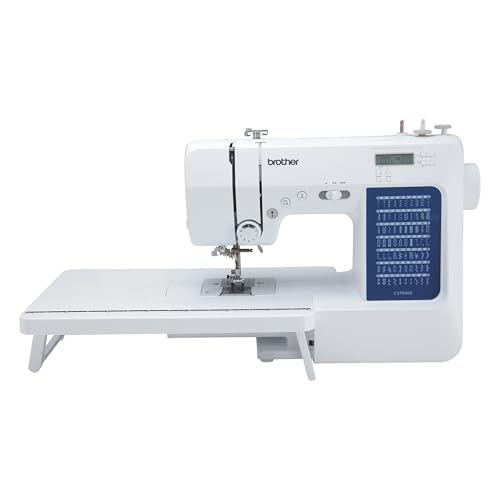
Brother CS7000X Computerized Sewing and Quilting Machine, 70 Built-in Stitches, LCD Display, Wide Table, 10 Included Feet, White

Janome 3160QDC-T Computerized Quilting and Sewing Machine with Bonus Quilt Kit
Last updated: 2026-05-20