Affiliate disclosure: sew.net earns a commission on purchases made through links on this page. This does not affect our recommendations. We only recommend products we would suggest to a friend.
Best Computerized Sewing Machine in 2026
Computerized sewing machines automate several tasks that mechanical machines require manual adjustment for: stitch selection via LCD, automatic tension matching to selected stitches, needle up/down stop positioning, and often automatic thread trimming. They cost more than comparable mechanical machines, but reduce friction at specific points in the sewing workflow.
This guide covers the best computerized machines across beginner, mid-range, and premium tiers.
Computerized vs mechanical: the actual trade-offs
Computerized advantages:
- LCD stitch selection is faster and more intuitive than dials for large stitch libraries
- Automatic tension reduces user adjustment for common fabric types
- Needle up/down stop is a genuine convenience for precision work
- Auto thread trim (on higher-end models) saves time in production sewing
- Consistent stitch settings recalled between sessions
Mechanical advantages:
- No electronics to fail or need servicing
- Simpler repair (most mechanics can service mechanical machines; computerized machines require brand-specific service)
- Often lower cost for comparable construction capability
- Preference of many experienced sewists for direct feedback
The choice depends on how much you value automation vs. predictable simplicity. Beginners often find computerized machines more approachable; experienced sewists sometimes prefer mechanical control.
Our top picks
Best beginner computerized: Brother CS7000X
The CS7000X is our top recommendation for beginners entering computerized machines. The LCD display makes stitch selection clear, the speed control slider gives genuine control, and the 70-stitch library covers all practical sewing applications a beginner will encounter. Automatic needle threader and drop-in bobbin round out the beginner-friendly feature set.
At approximately $200, it’s one of the best-value computerized machines on the market. The machine handles garment sewing, basic quilting, and home dec projects reliably.
Specs: 70 stitches | LCD display | Speed control | Automatic needle threader | Drop-in bobbin | 10.5 lbs
Best mid-range: Janome 3160QDC
The Janome 3160QDC sits in the $400–$500 range and bridges beginner and serious sewist needs. It has 60 built-in stitches including quilting stitches, a knee lifter (useful for quilters), one-step buttonhole, and Janome’s reliable stitch consistency that mechanical hobbyists trust.
The machine’s tension system requires less user fiddling than the Brother CS7000X across diverse fabric types. The included accessory set is strong, and the 25-year mechanical warranty reflects build quality.
Best for: Intermediate sewists who quilt or sew garments regularly and want reliable computerized convenience at a reasonable price.
Best advanced: Juki HZL-F600
The Juki HZL-F600 is the top computerized home machine recommendation for sewists who want professional-grade stitch quality. Its 225 built-in stitches, automatic thread cutter, one-touch needle threading, and extended workspace serve both garment makers and quilters.
The HZL-F600’s feed system is derived from Juki’s industrial expertise and produces more consistent results across varied fabrics than most home-tier machines. The stitch quality difference is noticeable at the $1,000–$1,400 price point.
Best for: Serious sewists and quilters who sew regularly and want professional-level output.
Features worth paying for vs. features that sound impressive
Worth paying for:
- Needle up/down stop function
- Auto thread trimmer (at $400+)
- Extended throat space (for quilters)
- Reliable dual-feed or walking foot compatibility
- Larger LCD display with design preview
Impressive but not always useful:
- 200+ stitch counts. Most sewists use 10–20 stitches regularly. 200 stitches is not a meaningful advantage over 60 for typical use.
- Built-in memory for custom stitches. Useful for embroidery specialists, rarely used in standard sewing.
- Connectivity (WiFi, USB design transfer). Relevant only for embroidery-capable machines.
Common questions
Do computerized sewing machines break more often than mechanical?
Electronic components are potentially a failure point that mechanical machines don’t have. In practice, mid-to-high quality computerized machines (Janome, Juki, Brother mid-range and above) are reliable for typical home use. The risk is real but not significant for quality brands purchased new.
What happens if my computerized machine needs repair?
Brand-specific service centers handle most electronic machine repairs. Find your brand’s authorized service center before purchasing if access to local service matters to you. All-brand repair shops exist but may not carry electronic components for all machines.
Is the Brother CS7000X reliable long-term?
Yes, for typical home use. The CS7000X is a mid-tier computerized machine in a mid-tier price range. It won’t perform at the same longevity level as a Janome or Juki at $600+, but it’s appropriate for the price point and standard home use patterns.
Related guides
- Best sewing machine for beginners →
- Brother CS7000i vs CS7000X →
- Juki HZL-F600 review →
- Take the quiz →
Featured products
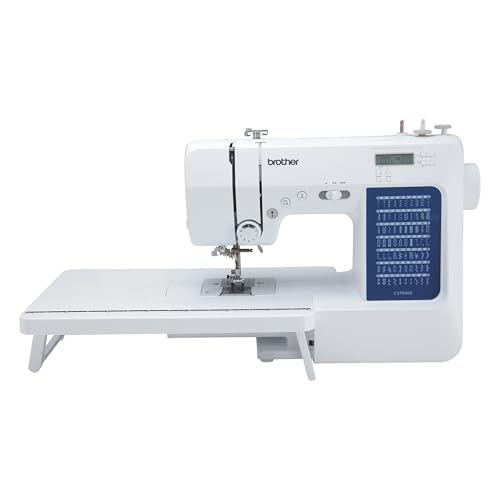
Brother CS7000X Computerized Sewing and Quilting Machine, 70 Built-in Stitches, LCD Display, Wide Table, 10 Included Feet, White

Janome 3160QDC-G Sewing and Quilting Machine with Bonus Quilt Kit!

Juki HZL-F600 Computerized Sewing and Quilting Machine
Last updated: 2026-05-20